
Dry Needling in Ahuntsic

People in Ahuntsic stay busy. Some ride the bike paths along the Rivière des Prairies, some run through the Île-de-la-Visitation nature park, students at Collège Ahuntsic spend long hours bent over laptops, and parents shovel the driveway every January morning. Sooner or later, most of them meet that stubborn knot in the upper shoulder, the glute or the calf that rest alone does not fix.

These knots, called myofascial trigger points, can refer pain elsewhere in the body and limit how you move. That is often where we suggest dry needling to our Ahuntsic patients, as one part of a physiotherapy treatment.

Book an appointment →
15+
Années d'expérience
5000+
Patients traités
98%
Taux de satisfaction
2
Cliniques à Montréal

What the Needle Actually Does

Dry needling means inserting a very fine needle, with no medication at all, directly into the tight band of muscle. That is where the word "dry" comes from: nothing is injected. When the needle reaches the trigger point, the muscle often gives a small reflex twitch, followed by a release.

Our goal is not only to ease today's tension. We want to restore the muscle's normal length, reduce pain and make the active work that follows possible. To learn more about the technique itself, see our page on dry needling in physiotherapy.
How a First Visit Unfolds

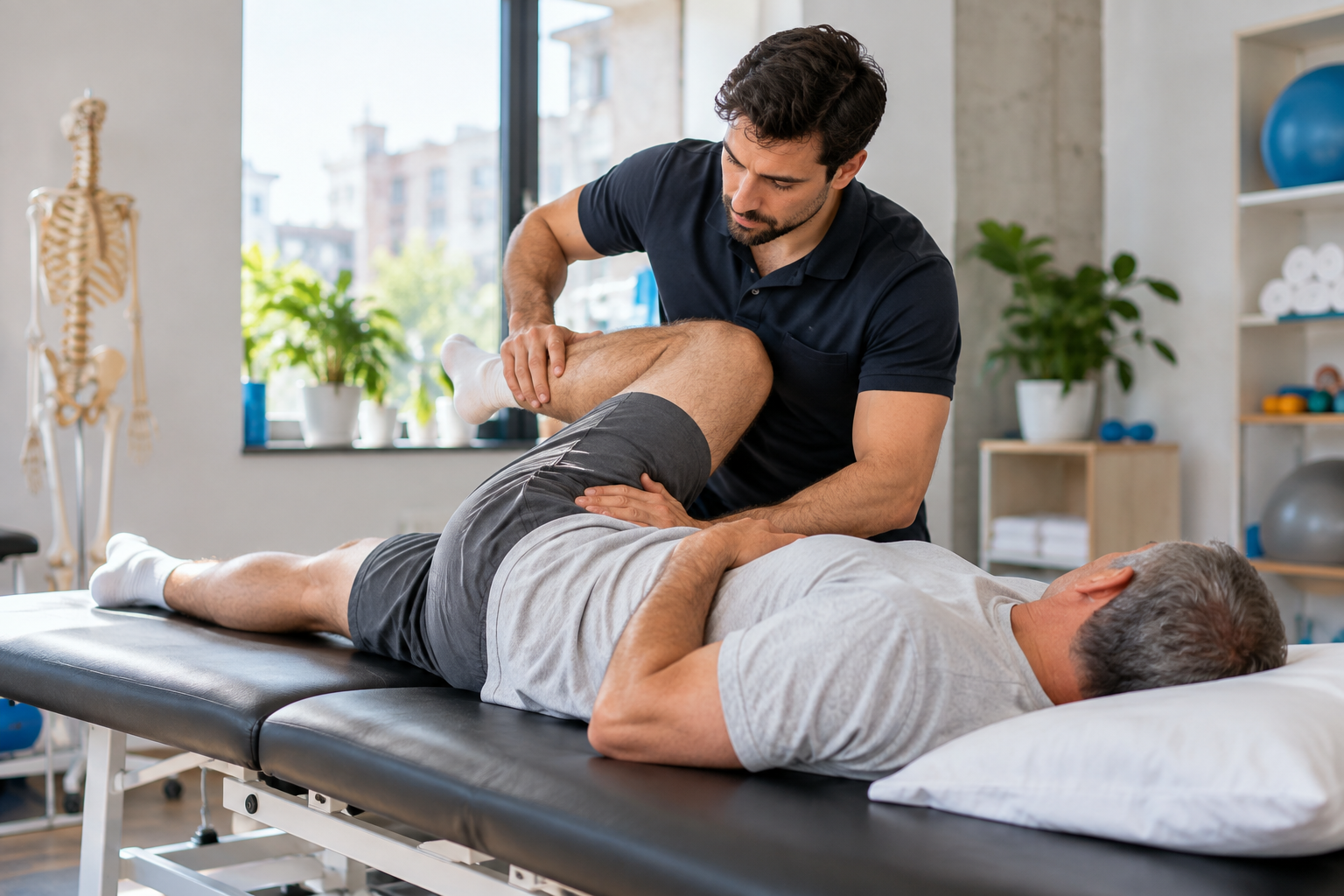
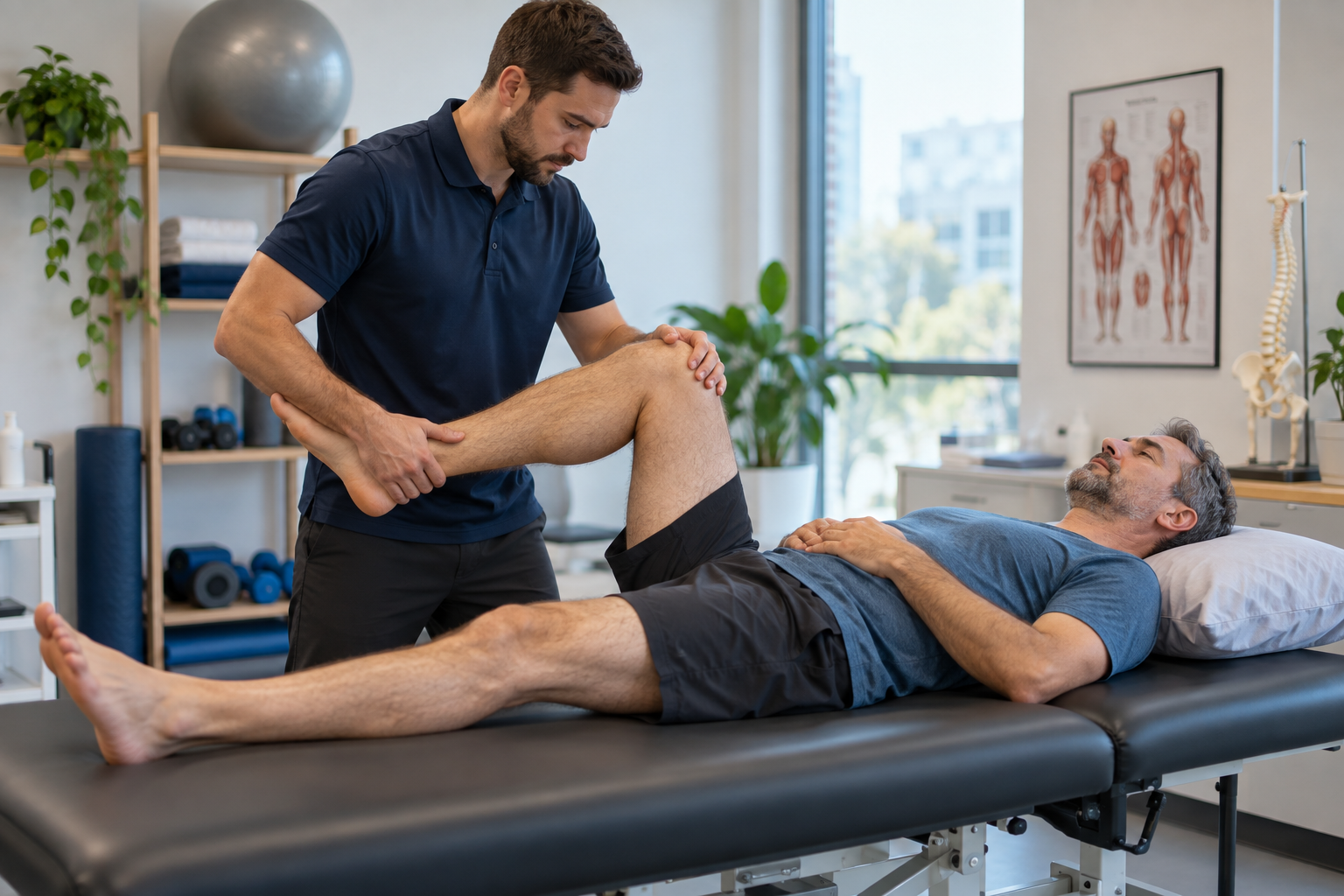
We never place a needle before we understand your situation. The first appointment starts with a conversation about your symptoms, your work, your activities and what makes the pain better or worse. Your physiotherapist then assesses your posture, your range of motion and the quality of your muscles to find the areas involved.

If dry needling suits your case, we explain what you will feel and get your consent before starting. During treatment, most people describe a brief cramp or a heavy feeling rather than a sting. The session usually ends with stretches or targeted exercises, because the needle opens a window that movement then reinforces.

Dry Needling or Acupuncture, What Is the Difference?

We hear this question almost every week, and it makes sense: both use fine needles. The similarity ends there. Acupuncture draws on traditional Chinese medicine and on points along meridians. Dry needling is based on anatomy and neurophysiology, and it targets the specific dysfunctional muscle found during the assessment.

Because we offer both services under one roof, we have no reason to push you toward one over the other. We simply recommend the approach that fits your problem best, and sometimes the two work very well together.

Who Is This Treatment Right For?

We use dry needling for many kinds of patients in Ahuntsic. The cyclist whose knee or hip started complaining after a busy season. The office worker who comes home every evening with a sore neck and a headache. The person injured on the job who needs to get back to lifting safely. The recreational hockey player dealing with lingering groin tension.

The technique also helps when pain has lasted a long time and the muscle has stayed on guard. In those cases, we build it into a broader plan for chronic pain treatment that includes education, progressive exercise and follow-up. The needle alone does not solve everything, and we would rather tell you that honestly.

A Multidisciplinary Clinic Since 2009

Since 2009, our team has brought together physiotherapists, occupational therapists, osteopaths, massage therapists and acupuncturists. That range changes how we treat your pain: if your back problem also needs an occupational therapy or osteopathy perspective, we can discuss it between colleagues instead of sending you somewhere else.

Our team speaks more than ten languages, which matters in a neighbourhood as diverse as Ahuntsic. Being able to describe your pain in your own language often leads to a better diagnosis. Our motto sums it up: you are in good hands.

Finding Us From Ahuntsic

For Ahuntsic residents, our Physio Ergo Sacré-Coeur clinic at 2576 Rue de Salaberry is our closest location. You can reach it at (514) 333-5167. Our main clinic is at 2111 avenue Northcliffe, level B, and answers at 514 488 3131.

If getting around is difficult, ask us whether an at-home physiotherapy visit is possible in your situation.

Book Your Visit in Ahuntsic

Tired of that muscle reminding you it is there with every move? Our team welcomes Ahuntsic residents for a complete assessment and a clear treatment plan. Book an appointment with us today.

Frequently Asked Questions

Does dry needling hurt?

Most of our patients feel a brief cramp when the needle reaches the trigger point, then a release. Some soreness similar to post-workout stiffness can linger a little after the session, and we explain how to manage it.

How many sessions will I need?

It depends on how long the problem has been there, your overall condition and how you respond to the first treatment. We reassess your progress at every visit and adjust the plan accordingly.

Can I exercise after a session?

Light activity is usually fine, but we often advise skipping an intense workout the same day. Your physiotherapist will give you guidance specific to the area treated.

Is dry needling right for everyone?

Not always. Certain medical conditions, blood thinners or a strong fear of needles call for a different approach. That is why the initial assessment matters, and we have other tools if the needle is not the right choice.

Prêt à retrouver vos mouvements?

Réservez votre évaluation sans attendre.

Réserver maintenant →