
Fall Risk Prevention Program

Montreal asks a lot of anyone with unsteady balance. Six months of freeze and thaw turn sidewalks into skating rinks, and the outdoor staircases that define Plateau and Rosemont triplexes are steep, narrow, and often icy by December. Our fall prevention physiotherapy program is built around that reality, not a generic textbook.

Most falls we see are not random accidents. They come from a combination of reduced leg strength, slower reaction time, medication side effects, and a home setup that was never adapted as mobility changed. Each of those is something we can measure and work on.

15+
Années d'expérience
5000+
Patients traités
98%
Taux de satisfaction
2
Cliniques à Montréal

What Our Fall Risk Assessment Includes

Every client starts with a full assessment so we know exactly where the risk is coming from. It usually takes one appointment, and it gives us a baseline we can measure progress against.

  1. Standardized balance and mobility testing, including sit to stand, timed walking, and single leg stance
  2. Lower body strength and ankle range of motion, the two things that most often decide whether a stumble becomes a fall
  3. Gait analysis, looking at step length, foot clearance, and how you turn
  4. Vision, dizziness, and vestibular screening, since inner ear problems are a frequent hidden cause
  5. A review of footwear, walking aids, and daily habits

We explain the findings in plain language, in the language you are most comfortable in. Our team speaks more than ten languages between us, which matters when we are asking careful questions about symptoms.

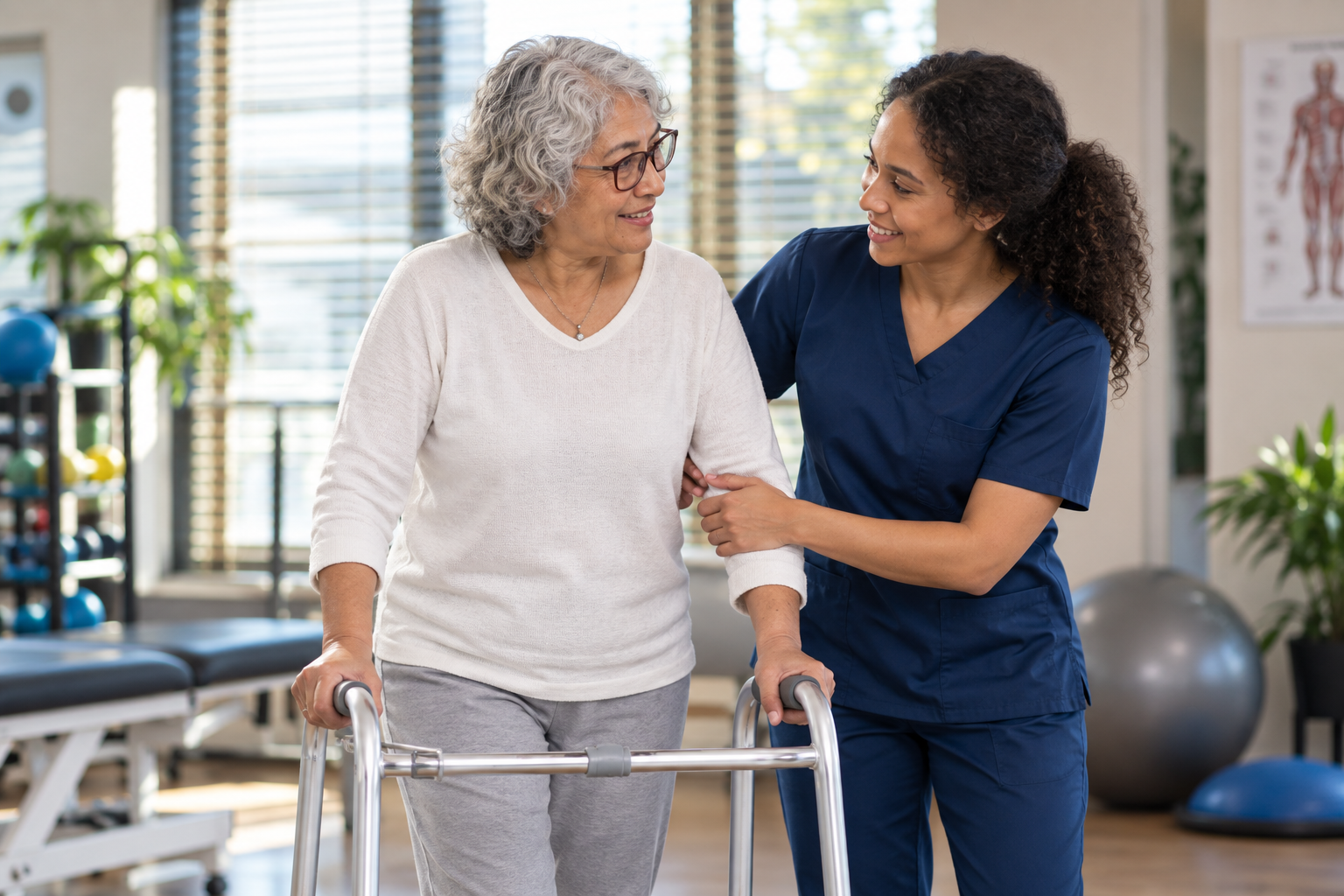
Balance and Strength Training That Actually Transfers

Exercise only reduces falls when it is challenging enough and specific enough. Our programs progress you from supported balance work to controlled, real world tasks: reaching, turning, stepping over an obstacle, carrying groceries, managing a curb.

Strength work focuses on hips, quadriceps, and ankles, because those are the muscles that catch you. Sessions are graded so they stay demanding without ever feeling unsafe, and we adjust as your confidence grows. Many clients tell us the biggest change is not the test scores, it is being willing to leave the house in February again.

Gait Training and the Right Walking Aid

A cane or walker that is the wrong height, or the wrong type, adds risk instead of removing it. We check the fit, teach proper use on stairs and slopes, and retrain walking patterns that have become cautious and shuffling after an illness or a long hospital stay.

For clients living with Parkinson's, stroke, multiple sclerosis, or other conditions affecting movement, this work is closely tied to our neurological physiotherapy program, and the two are often run together.

Home Safety Evaluation and Home Visits

Clinic gains hold up only if the home supports them. Our occupational therapists and physiotherapists look at the whole environment: lighting on the stairs, loose rugs, bathroom transfers, grab bar placement, the height of the bed and the chairs you use most, and how you manage the front steps in winter.

When getting to the clinic is difficult, we come to you. Home visits across Montreal let us assess and treat in the exact space where the risk lives, which is often more useful than anything we could do in a treatment room.

Support After an Injury, a Fracture, or Surgery

A first fall is the strongest predictor of a second one. Whether you are recovering from a hip or knee replacement, a wrist fracture, or a bad sprain, we work on regaining strength and confidence at the same time, since fear of falling changes how people move long after the tissue has healed.

Alongside physiotherapy, we can draw on occupational therapy, acupuncture, dry needling, osteopathy, and massage therapy when pain is limiting what you can practice.

A Montreal Clinic With Real Experience in Older Adults

We have been a multidisciplinary clinic in Montreal since 2009, with eight disciplines under one roof and a dedicated geriatric care team. Fall prevention is not a side offering for us, it is a regular part of the week.

That experience shows in the small things: pacing appointments so nobody is rushed, coordinating with your family doctor or a family member when it helps, and knowing when a referral is the right call. You can find directions, hours, and parking details on our clinic location page.

Book a Fall Risk Assessment in Montreal

If you or a parent has been feeling less steady, the winter is a good reason not to wait. Book an appointment with our Montreal team and we will start with a clear assessment and a plan you can actually follow. You are in good hands.

Frequently Asked Questions

Who should be assessed for fall risk?

Anyone who has fallen in the past year, feels unsteady on stairs or ice, has started avoiding activities because of balance worries, or is recovering from surgery or a long period of inactivity.

Do I need a doctor's referral?

No referral is needed to see us in Quebec. Some private insurance plans ask for one before reimbursing, so it is worth checking with your insurer.

How long does the program last?

It depends on your starting point and goals. Balance and strength respond gradually, so we plan for a progressive program with regular reassessments rather than a fixed number of visits.

Can you come to my home?

Yes. We offer at home physiotherapy across Montreal for clients whose mobility makes travelling to the clinic difficult, and home visits are ideal for safety evaluations.

Is this useful if I have never fallen?

Very much so. Prevention works best before a first fall, and an early assessment gives us a baseline to compare against as things change.

Prêt à retrouver vos mouvements?

Réservez votre évaluation sans attendre.