Perinatal Physiotherapy

Pregnancy and childbirth change the body deeply, and those changes deserve specialized follow-up rather than a general approach. Since 2009, our team has been supporting women in Montreal before and after birth, from the first trimester through to a full return to physical activity.

Perinatal physiotherapy is just as much for the woman dealing with low back pain in her sixth month as it is for the woman who, eight weeks after delivery, wonders why her abdomen has not gone back to its old shape.

15+
Années d'expérience
5000+
Patients traités
98%
Taux de satisfaction
2
Cliniques à Montréal

What We Treat During Pregnancy

Weight shifting forward, ligaments loosening under hormonal changes and posture adjusting itself all create very specific tensions. We step in early so that this discomfort does not settle in for the long haul.

  1. Low back, sacroiliac and pelvic girdle pain
  2. Sciatica and numbness in the legs
  3. Pubic pain and a feeling of instability in the pelvis
  4. Carpal tunnel syndrome linked to fluid retention
  5. Pelvic floor preparation ahead of delivery
  6. Guidance on resting, working and sleeping positions
Postpartum Recovery, One Step at a Time

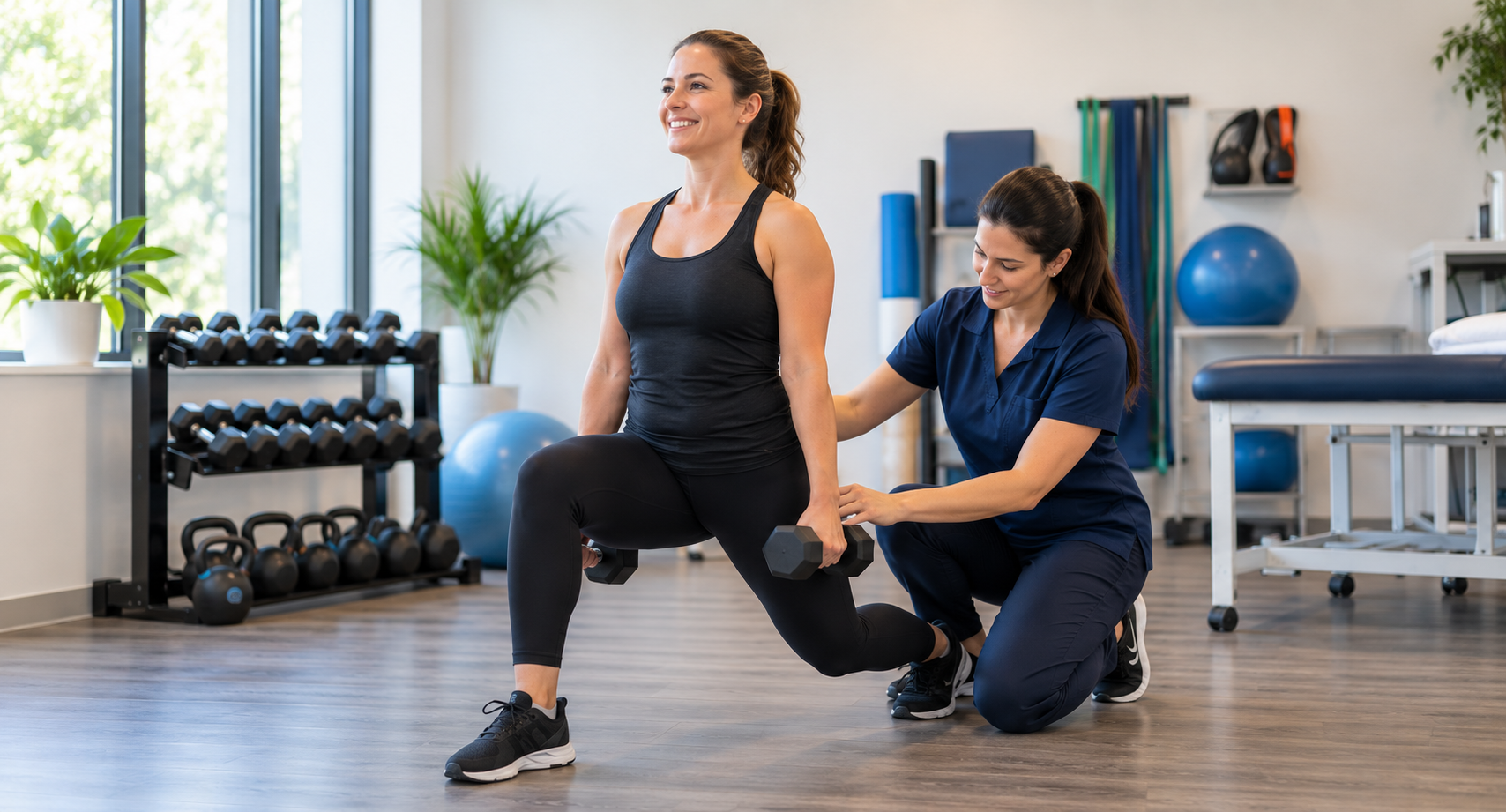
Postpartum is not a passive waiting period. An assessment a few weeks after birth lets us measure the real state of the abdominal muscles and the pelvic floor, then build a realistic progression from there.

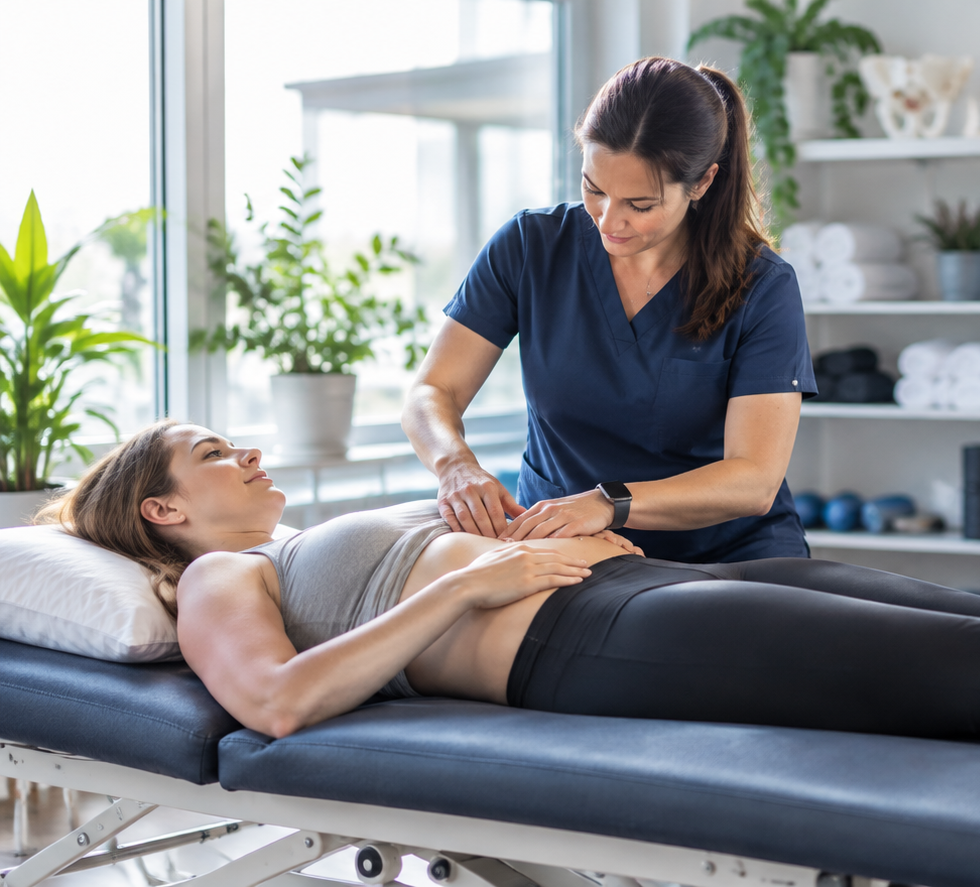
One thing we look at closely is diastasis recti, the separation of the abdominal muscles that lingers for many women after delivery. Rather than piling on sit-ups, which often make things worse, we work on control of the abdominal canister and its coordination with breathing. Stress urinary leakage, sensations of pelvic heaviness and scar pain after a C-section or a tear also fall within what we treat.

The Pelvic Floor Calls for Precision

The pelvic floor supports the bladder, the uterus and the rectum, and it carries a considerable load for nine months. Our approach in pelvic physiotherapy combines a detailed assessment, exercises suited to your condition and clear teaching about what is actually happening in your body.

Contrary to a widespread idea, Kegel exercises are not right for everyone. A pelvic floor that is already too tight responds poorly to strengthening, and that is exactly why the assessment comes before the program.

Why See a Specialized Clinic

Perinatal physiotherapy calls for training distinct from classic orthopedic physiotherapy. The anatomical landmarks, the precautions tied to pregnancy and the reading of postpartum symptoms are not something you improvise.

Our multidisciplinary Montreal clinic brings eight disciplines together under one roof: physiotherapy, occupational therapy, osteopathy, massage therapy, acupuncture, dry needling and geriatric care. If your perinatal follow-up would benefit from massage therapy or osteopathy alongside it, the coordination happens internally, without you having to tell your story all over again somewhere else. You can learn more about our team and our approach.

Getting Out With a Newborn, or Not Getting Out at All

Leaving the house with a three-week-old baby in the middle of a Montreal February is sometimes a feat in itself. Icy sidewalks, parking and feeding schedules make appointments complicated during those first weeks.

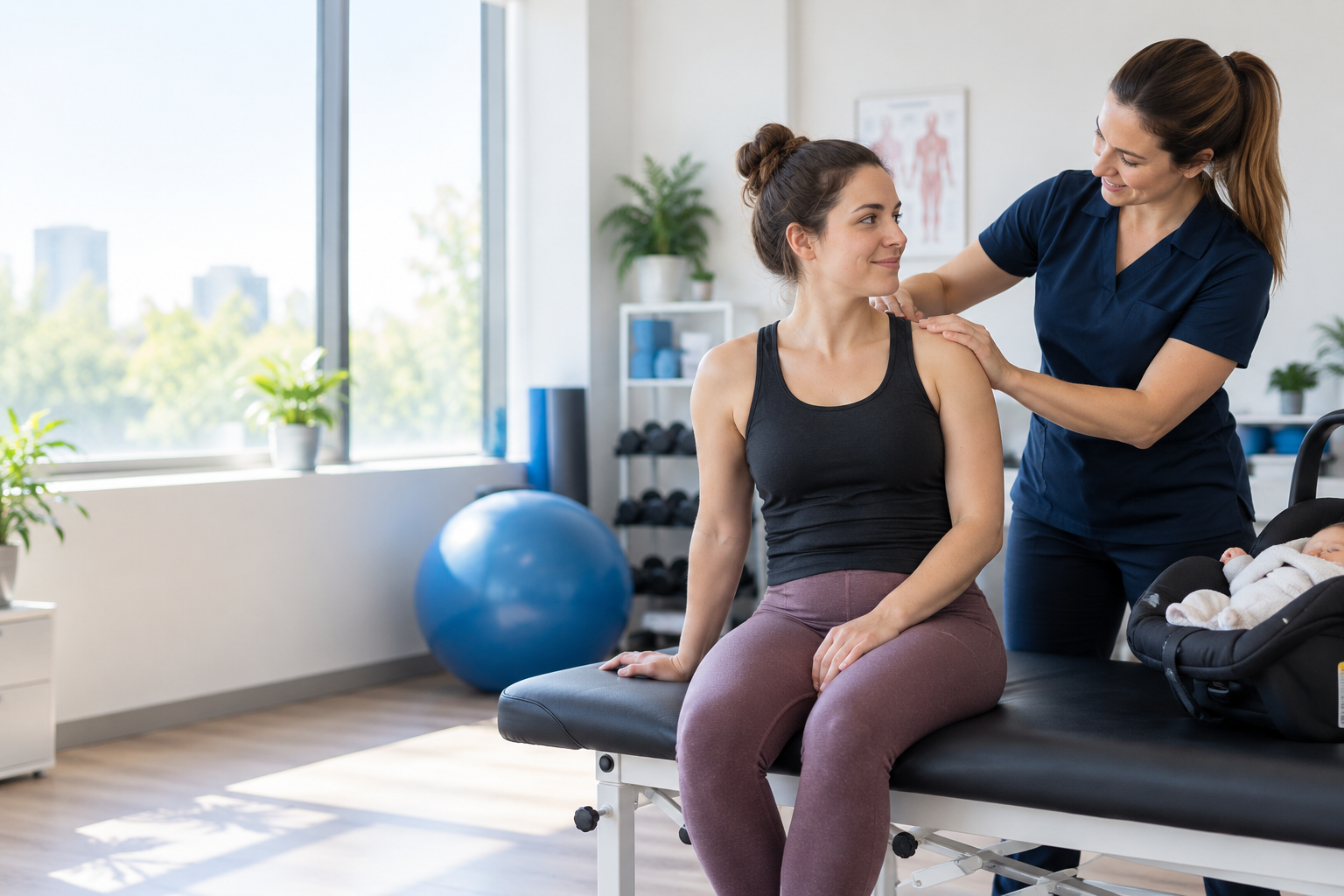
That is why we offer at-home physiotherapy everywhere in Montreal. Our therapists travel with the equipment they need and work in your own environment, which has the added benefit of showing us how you carry, breastfeed and move around day to day.

Our team speaks more than ten languages, including French, English, Spanish and Arabic. In Montreal, being able to describe an intimate pain in your mother tongue changes a great deal.

Book an Appointment in Montreal

Whether you are a few weeks pregnant or gave birth two years ago, it is never too early or too late to come see us. Get in touch with us to schedule a first assessment at the clinic or at home, anywhere on the island of Montreal. In good hands, from the very beginning and well beyond.

Frequently Asked Questions

How soon after giving birth can I start perinatal physiotherapy?

A first assessment usually happens around the sixth week postpartum, once the initial medical follow-up is complete. That said, some guidance on posture and pain management can be given well before that.

Is physiotherapy safe during pregnancy?

Yes, when it is done by a physiotherapist trained in perinatal care. The techniques and positions are adapted to each trimester, and we adjust the plan if your pregnancy involves particular considerations.

Can diastasis recti be corrected without surgery?

In most cases, a progressive abdominal rehabilitation program clearly improves function and reduces the gap. Surgery remains a last resort, discussed with your doctor.

Do I need a medical referral to book?

No, physiotherapy is directly accessible in Quebec. A referral may still be required by some private insurers for reimbursement, so check with your plan.

Do you offer at-home appointments for perinatal follow-up?

Yes, our physiotherapists travel throughout Montreal. It is an option many parents choose during the first weeks after birth.

Prêt à retrouver vos mouvements?

Réservez votre évaluation sans attendre.