Temporomandibular Joint (TMJ)

The temporomandibular joint connects the jaw to the skull, just in front of the ear, and it works thousands of times a day as you eat, speak or yawn. When it stops working properly, the pain does not always stay in the jaw: it often radiates to the temple, the ear or the neck. At our clinic at 2111 Northcliffe Avenue, our team has been assessing and treating temporomandibular disorders (TMD) since 2009.

physiotherapy for refugees
15+
Années d'expérience
5000+
Patients traités
98%
Taux de satisfaction
2
Cliniques à Montréal

The signs of a temporomandibular disorder

Many of our Montreal patients come in after months of discomfort, because they assumed the problem came from their teeth or their sinuses. Here is what we see most often:

  1. Jaw pain on waking or at the end of the day
  2. Clicking, popping or grating when opening the mouth
  3. Limited mouth opening, difficulty biting into an apple or a sandwich
  4. Tension headaches, especially at the temples
  5. Tinnitus, a blocked ear sensation or mild dizziness
  6. Clenching and night-time bruxism
  7. A jaw that locks, either open or closed

An isolated, painless click is not always a problem. It is the combination of pain, restriction and muscle fatigue that deserves an assessment.

Our assessment: finding the real source

A first session with us takes as long as it needs to take to understand the full picture. We measure your opening range, we palpate the chewing and neck muscles, we watch the path the jaw travels and we check the posture of your head and neck. That last part often comes as a surprise: a forward head posture, very common in people who spend their days at a keyboard, directly changes the mechanics of the jaw.

We also look for what keeps the problem going day to day. Stress, poor sleep, chewing on one side only, chewing gum, resting your chin on your hand: these habits often weigh more heavily than the joint itself.

occupational therapy

Our approach to treatment

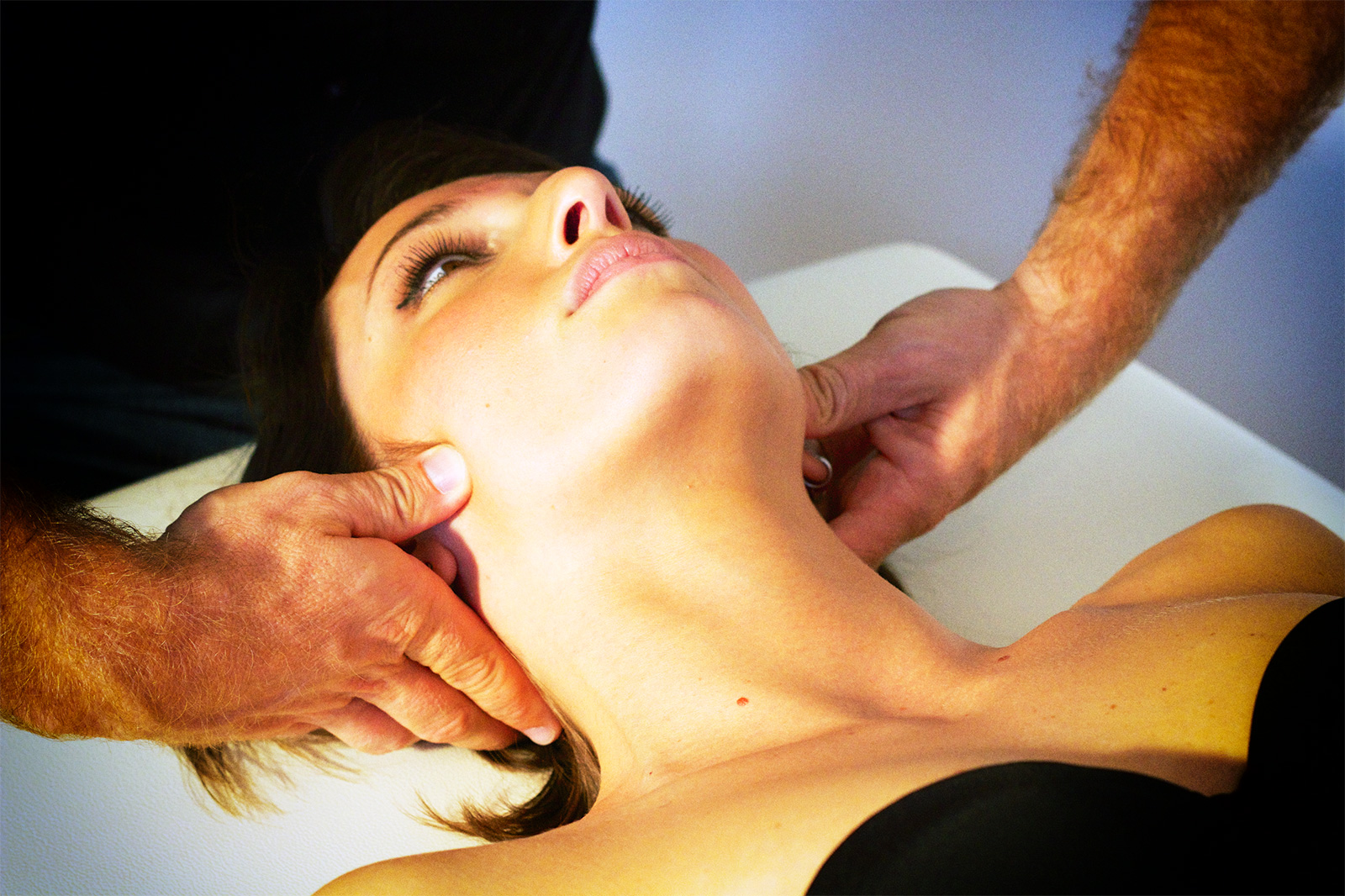
We work with manual therapy for the jaw, applied outside the mouth and, when it is indicated and with your agreement, inside the mouth. Intra-oral techniques, done with gloves, let us reach the lateral pterygoid muscle, a muscle often responsible for pain that no amount of pressure on the cheek will relieve.

Depending on your condition, we add:

  1. Motor control and jaw repositioning exercises, simple enough to repeat at home
  2. Work on the upper neck, almost always involved in TMD
  3. Dry needling to release trigger points in the masseter and temporalis
  4. Postural education and strategies for managing clenching
  5. A progressive program to get back to a comfortable mouth opening

Because we bring eight disciplines together under one roof, we can also point you toward a colleague when it speeds up your recovery. Massage therapy helps a great deal for patients whose jaw reacts mostly to stress, and acupuncture gives good results on persistent facial pain.

Working together with your dentist

TMJ disorders are rarely treated in isolation. We work regularly with dentists and orthodontists in Montreal, particularly when an occlusal splint has been prescribed or orthodontic treatment is under way. The splint protects your teeth from bruxism; physiotherapy goes after the pain and the mechanics. The two complement each other, and we are glad to communicate with your dental professional to coordinate the plan.

A neighbourhood clinic, easy to reach

We see patients from Côte-des-Neiges, NDG, Westmount, Ahuntsic and Bois-Franc, and our team speaks more than ten languages, including French, English, Spanish and Arabic. Describing jaw pain takes nuance, and being able to do it in your own language changes the quality of the assessment.

We treat patients from 2 to 80 years old. We provide receipts recognized by private insurers, and we handle CNESST and SAAQ files, which matters when jaw pain follows a workplace accident or whiplash from a car collision. For people who have trouble getting around, home visits are possible in the Montreal area.

Why see a physiotherapist for TMJ

The jaw is a demanding joint: two sides that have to move together, a mobile articular disc, and a dozen muscles taking part in the movement. A generic "muscle relaxation" treatment often misses the mark. We take the time to explain what is happening in your joint, because a patient who understands the problem stops the habits feeding it much faster.

Book an appointment in Montreal

If your jaw clicks, locks or wakes you up at night, we can assess you quickly at our Montreal clinic. Call us at 514 488 3131 or write to us to book an appointment. You are in good hands.

Frequently Asked Questions

Do I need a medical referral to see a physiotherapist for TMJ?

No, physiotherapy is directly accessible in Quebec. A referral may still be requested by your private insurer, so check your contract before the first session.

Is intra-oral treatment painful?

It can be tender for the first few minutes, because the muscles being treated are already irritated. We adjust the pressure with you at all times, and this technique is never used without your consent.

How many sessions should I plan for?

That depends on how long the symptoms have been there and whether bruxism is involved. We reassess your progress as we go and adjust the plan rather than setting a number of sessions in advance.

Can my ear pain really come from my jaw?

Yes, it happens often. The TMJ sits just in front of the ear canal, and irritation of the joint or the nearby muscles frequently causes ear pain, a feeling of fullness or tinnitus with no infection at all.

Does my CNESST or SAAQ file cover this treatment?

Yes, we accept CNESST and SAAQ files. Bring your claim number to the first visit and we take care of the billing directly.

Prêt à retrouver vos mouvements?

Réservez votre évaluation sans attendre.